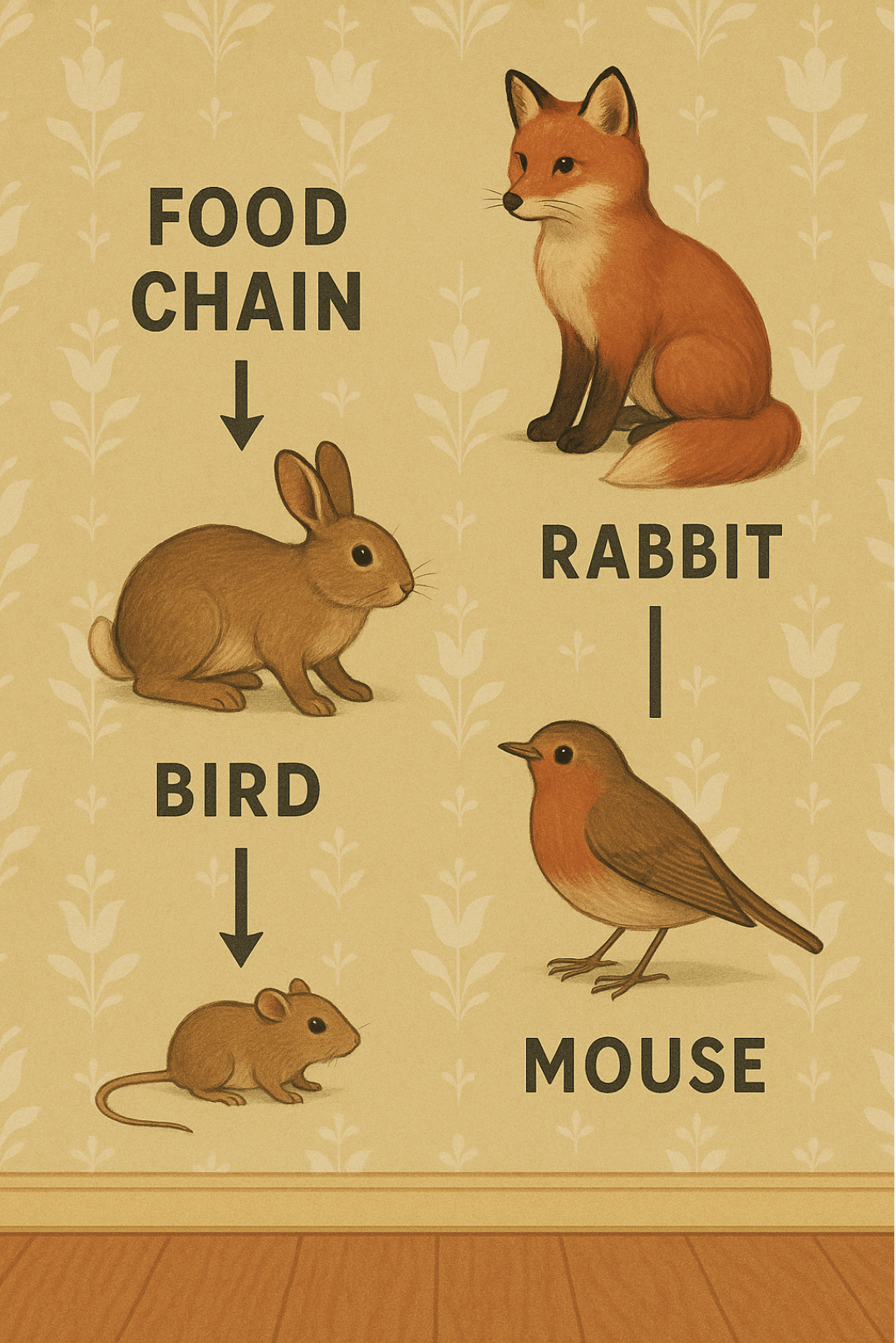
“Mommy, are people at the top of the food chain?”
It started, as many philosophical debates do, in the carpool line. I was driving home from school, minding my own business, trying to negotiate a left turn across three lanes of traffic when, from the back seat, Corinne, my eight-year-old, posed the question:
“Mommy, are people at the top of the food chain?”
“Yes, we are,” I replied, glancing at her in the rearview mirror, proud that we were covering evolutionary biology somewhere between snack time and swim practice.
But just as I was mentally awarding myself a gold star for maternal enrichment, Camille, age five, and armed with unshakable confidence-jumped in.
“No, we aren’t,” she corrected in from the back seat of the car.
Now, I’ve learned that logic is a flexible concept when wielded by a kindergartener. Still, I took the bait.
“Camille,” I asked, “if people are not on the top of the food chain, then who is above us?”
Without missing a beat, she retorted, “Oh Mommy, that’s easy – Canada.” Canada? Not lions. Not sharks. Not apex predators of land or sea. Canada?
At first, I tried to follow the great hierarchy of preschool understanding, anything farther north must be higher up?
There was no follow-up explanation. Just the complete and utter conviction that Canada ruled.
And really, how do you argue with that kind of logic? I mean, they do have Mounties, maple syrup, and a national anthem that doubles as a lullaby. Maybe Camille was onto something. I sat there, quietly marveling, just another typical day in the life of a mom. One minute you are the resident expert on what’s for dinner, the next you are fielding profound geopolitical theories from someone who still needs help opening a juice box.
Because sometimes, the best thing you can do is let your child believe in their own version of the food chain… at least until snack time.
©Momories 2025